

My Top 4 Helpful Herbal Teas for Digestion
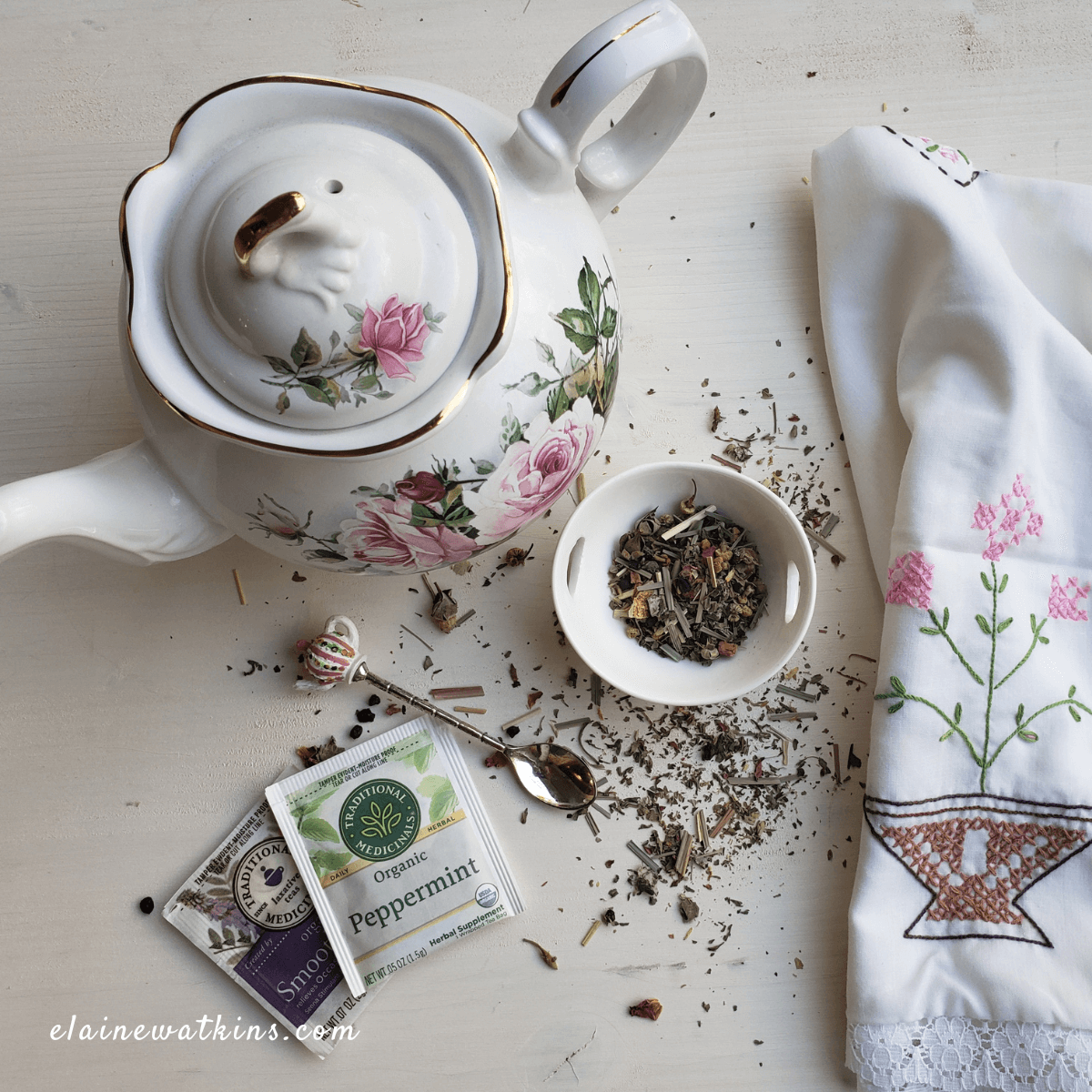
A hot cup of tea can be so soothing, especially on cooler days and nights, but there’s so many healing benefits that can come from the teas that you choose. Let me share my top 4 helpful herbal teas for digestion, plus how we make them and why.
These herbal teas are white teas, as compared to green and black teas containing caffeine, and shouldn’t be a problem if enjoyed in the evening.
Because they’re herbals, they each cross over into also including benefits for anxiety, sleep, immunity, and more, but today I’m focusing on herbal teas for digestion today.
My Top 4 Herbal Teas for Digestion
- Ginger – My personal favorite tea for most types of the digestive discomforts I might experience is ginger. I usually just buy a hand of ginger at the grocery store, clean it, thinly slice, and then dehydrate for storage. We always have easy access to steep and then strain for a nice gut-soothing infusion. Ginger is reported to decrease cramping, aid with digestive gas, bloating, and movement, and more
- Peppermint – Another great tea with similar benefits, that is also very easy to grow, is peppermint. We grow and store up dehydrated peppermint leaves for quick and easy infusions for digestive help but also because it simply tastes great
- Chamomile – Another great tasting herbal tea that is easy to access and use for digestive support. I have not had success growing and collecting chamomile, but many do. Instead, I usually have bag or loose chamomile tea at the ready for assistance with such challenges as gas, bloating, and movement, inflammation, cramp reduction
- Fennel – If you like the taste of licorice, you love fennel tea. With a somewhat milder flavor, fennel looks similar to your typical celery and is also reported helpful to combat a variety of digestive challenges such as spasms and cramps, increase motility in the small intestine, aid secretion of digestive juices, reduce acid reflux, as well as gas and bloating
Health Benefits
Peppermint is a beneficial, nutritive herb with magnesium, potassium, niacin, copper, iodine, iron, and sulphur plus vitamins A and C. The leaves can be used fresh, a stronger flavor, or dried and while often the flavor of sweet treats, is also commonly used medicinally for digestion, bloating, cramps, muscle and menstrual pain, neuralgia, soothing effects on stomach spasms, and anti-nausea, heartburn, headaches, gas, and constipation. Just the smell of peppermint alone can have an uplifting effect and be a great afternoon choice to re-energize you without caffeine.
Ginger’s root contains protein, iron, potassium, magnesium, phosphorus, calcium, as well as vitamins A, C, and B-complex. Ginger is an antioxidant and anti-inflammatory. In addition to the many reported digestive benefits including gas, nausea, diarrhea, and indigestion, benefits have also been seen with arthritis, anxiety, infection, and heart disease.
Chamomile flowers are high in calcium, magnesium, potassium, iron, manganese, and zinc plus some vitamin A. While known for its benefits relating to anxiety and insomnia and calming in general, chamomile also eases stomach cramps, nausea, indigestion, gas, and constipation, as well as coughs, menstrual cramps, headaches, and asthma. Watch out, however, if you have allergy issues with ragweed or daisies.
Fennel contains potassium, sulphur, and sodium. It’s commonly used for relief with gas, intestinal challenges, muscle spasms, acid reflux, appetite management, and bloating. Benefits are also reported for congestion and coughs, blood pressure and heart disease, inflammation, breast milk flow, and menstruation.
My top 4 herbal teas for digestion are all single herbs, but there’s also many great blends to choose from too.
Preparation
You can find these in your local grocery store or online sold as individual teas or in blends for particular challenges like constipation, immunity, and more. My 2 favorite teas in bag brands are:
Pour hot water over your tea bag in your favorite cup to fill and steep for 5-7 minutes. Remove the bag and enjoy as is or with a squeeze of fresh lemon and/or a bit of honey (immunity).
Also, you can definitely buy ginger tea, but it’s easy to make your own with fresh or dried ginger slices.
Just peel and slice a thin slice from a finger. You’ll want about 1 tablespoon per cup. Drop it in your favorite cup and add hot water. Same as before, let it steep for 5-7 minutes. Remove the ginger slice and enjoy. You can also do the same with easy to store dehydrated ginger.
Ginger has a sharp flavor, so you’ll probably want to add a bit of honey or a slice of lemon. Adding a touch of turmeric (inflammation) or cinnamon (blood sugar) to ginger tea is great too.
You can also use dehydrated ginger instead of fresh, and you can add your ginger to the water you’re boiling for your tea.
If you are using fresh herbal leaves for tea, as in your peppermint tea, try bruising or tearing your leaves before steeping to access more of the flavor and nutrients.
Dried loose leaf teas are a great option also and can offer a bigger selection of single or multi-herb blends. Aside from loving to experiment with all the steeping gadgets, I just really like how the flavors really introduce themselves to you for a very enjoyable cup. My favorite brand for loose tea Frontier Co-op.
Also check out Vitacost and Azure Standard for other great options.

Tools for a Great Cup of Tea
There are So many different kinds of steeping tools. Here are 2 versions of my current favorite stainless steel, tea strainer:
I like that this design has:
- 2 handles to keep it from tipping into my cup
- deep container to nicely immerse even in my deeper mugs
- big enough for the tea leaves to nicely bloom and release all their benefits.
Herbal Teas are Great for Digestive Issues But…
While I love and highly recommend you try and enjoy these and other herbal teas, if you have a persistent digestive challenge causing a continual need for relief, let me suggest you get help to seek out the root cause of the issue and help you make strategic changes and create a strategy for relief.